


[SCORRI IN GIU’ PER LA VERSIONE IN ITALIANO]
[ENG] With the release of their second album, II, ICONIC continue to bring together some of hard rock’s most respected musicians. We spoke with guitarist Michael Sweet about the band’s evolution, songwriting, chemistry and the timeless power of rock. A conversation about legacy, emotion and what it means to keep the spirit of hard rock alive.
- Hello Michael and welcome on Heavyworlds.com, it’s a pleasure to have you here. “II” feels like an album where Iconic has moved from being a collection of incredible musicians to becoming a real band with its own identity. When did you personally feel that Iconic stopped being a project and started becoming something bigger?
Well, to be honest, it’s important for me for a band to tour. That’s when it really begins to feel like a real band. Once there is a tour planned and the band can go out and support the album the right way. Unfortunately we haven’t been able to do that yet because everybody has such busy schedules. And we may not be able to do that but I’m just hoping for the possibility in the near future and the moment we schedule a tour and begin touring, then it will most definitely feel like a real band to me.
- When you put five musicians with such strong personalities and histories in the same room, the biggest challenge is not talent but chemistry. What is something unexpected you discovered about each other while making this second album?
Again, to be honest, we were not in the same room together. I arranged the songs based on some riff ideas that Joel Hoekstra sent me digitally and then once the songs were arranged and finished musically, I went into a studio and track my guitars. And then I sent that to Aldo. And then Aldo built from there and tracked The vocals. Obviously Tommy and Marco and Joel track their own. Individual tracks on their own as well so we weren’t able to work together but I hope someday we will be able to work together. In the same studio. I think that makes a huge difference and there’s something very special about that. That’s what Stryper does and we absolutely love it.
- Every member of Iconic has helped shape the sound of hard rock in different ways. Did you ever feel the weight of your own legacy while writing “II” or did you manage to approach it with the freedom of a new band?
I definitely approached it with the freedom of a new band. I have a particular style of writing and arranging and especially guitar tone and style. So it’s very difficult for me to escape that. I think the minute someone hears my guitar playing they automatically hear Stryper in my plane and in my tone. But I just did what I normally do and I didn’t try to reinvent the wheel so to speak. And it was easy. That’s how I approach every project to be honest.
- Having two iconic guitar players like Joel and Michael in the same band could easily become a competition. How did you turn these two different guitar identities into a conversation rather than a battle?
I simply just played my parts at the sections that were sorted out, and then Joel plays his parts. So there isn’t really a lot of thought put into it. It really came together quite easily and we were able to make it work and sound cohesive.
- The album title “II” is simple but very meaningful: it suggests continuation but also evolution. What does this second chapter say about Iconic that the first album couldn’t?
You always hope that you go somewhere new and take it somewhere special and add a higher scale/level. At least that’s always important for me with any album that I’m a part of. I think we’re able to do that with this album. I think it’s a perfect follow up to the first album and it has its own signature and it’s just different enough to make it its own.
- Songs like “Cry No More”, “Tears Keep On Falling” and “Heart Of Stone” explore different emotional sides of rock. Do you think modern hard rock sometimes forgets the importance of vulnerability and real human emotions?
Absolutely. I think when all you do is heavy and hard, you can lose the emotion. Again, and not to keep referencing Stryper, but that’s something we work hard at. Is mixing in songs that are melodic and a little more radio friendly along with the heavy/edgy. And something iconic is doing as well. Although iconic is a different style, a little bit more blue and soulful, the rule still applies. A great song is a great song. You have to have a great melody and a great hook or your spinning your wheels for the most part. I’m glad that we have a lot of those on this new album.
- Tommy Aldridge and Marco Mendoza represent decades of rhythm section experience. When musicians reach that level, do you still discover new things about playing together, or is it more about instinct and musical chemistry?
The rhythm section is a very important part of the album. It’s the foundation that the house is built upon. Tommy and Marco are the best. You can’t find a better rhythm section and they’ve brought so much to the table and I think it shows. People can hear the difference. It’s an honor to be playing with these guys and they always deliver.
- Hard rock has survived many changes in the music industry. Looking at younger generations discovering this genre today, what do you think they connect with in rock music that never gets old?
It’s a movement. There is a level of energy and excitement that cannot be compared with anything else. I think kids want that excitement. Being a part of the movement back in the late 70s and early 80s in Hollywood, it was electrifying and magnetic. It drew so many people in to the streets of valet and we were there. We were able to witness that and be a part of that. And I think kids nowadays want the same thing. So we’re trying to keep it alive and hopefully we can do so.
- Many supergroups are created around individual names, but the challenge is making listeners care about the band itself. What do you think is the secret ingredient that makes Iconic more than just a lineup of famous musicians?
As I said earlier, it’s all about the songs. If you don’t have good songs and you don’t have anything. I think a lot of musicians missed that point. For many it’s about the performance or how fast you can play or how many parts you can add or how high you can sing, but if you’re doing all that over a bad song, then you’re just spinning your wheels and wasting your time. You have to have great songs. And I think that makes the difference with any band. And that’s something that iconic and obviously Stryper, work very hard at. Writing great songs.
- If you had to choose one song from “II” that represents the personality of Iconic as a band, not the individual members, which one would you choose and why?
I know this might sound cliché, but it’s impossible for me to pick one song. They’re all special and they all have meaning and they are all very unique from one another. So it’s very difficult to pick one song. I’m just happy that I’m a part of this project and that we’ve been able to make two albums and I hope there are many more. A third and a fourth and the fifth and so on and so on.
- After decades of touring, recording, and living the rock ’n’ roll lifestyle, what is the one thing that still surprises you about making music?
That I’m blessed to be able to still do it. If there’s a calling on my life and a gift that God has given me and I can still use that and reach people and inspire people and encourage people. That’s why I do this. The music is great, but what live lives on after the music is even greater.
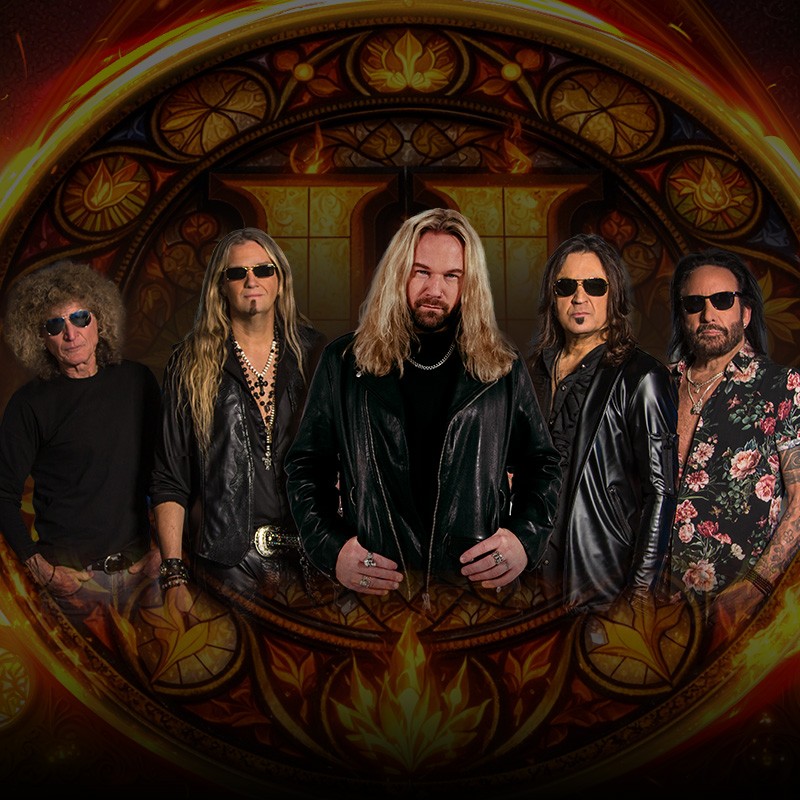
[ITA] Con il loro secondo album, II, gli ICONIC continuano a riunire alcuni dei musicisti più rispettati dell’hard rock. Abbiamo parlato con il chitarrista Michael Sweet dell’evoluzione della band, della scrittura, della chimica tra i musicisti e del potere senza tempo del rock.
- Ciao Michael e benvenuto su Heavyworlds.com, è un piacere averti qui. “II” sembra un album in cui gli Iconic sono passati dall’essere una collezione di musicisti incredibili a diventare una vera band con una propria identità. Quando hai sentito personalmente che gli Iconic avevano smesso di essere un progetto e avevano iniziato a diventare qualcosa di più grande?
Beh, ad essere onesto, per me è importante che una band vada in tour. È lì che inizia davvero a sembrare una vera band. Una volta che c’è un tour pianificato e la band può uscire e supportare l’album nel modo giusto. Sfortunatamente non siamo ancora riusciti a farlo perché tutti hanno programmi così impegnativi. E potremmo non essere in grado di farlo, ma spero semplicemente nella possibilità di farlo nel prossimo futuro e nel momento in cui programmeremo un tour e inizieremo a fare concerti, allora mi sembrerà sicuramente una vera band.
- Quando metti cinque musicisti con personalità e storie così forti nella stessa stanza, la sfida più grande non è il talento ma la chimica. Qual è qualcosa di inaspettato che avete scoperto l’uno dell’altro durante la realizzazione di questo secondo album?
Ancora una volta, ad essere onesto, non eravamo nella stessa stanza insieme. Ho arrangiato le canzoni basandomi su alcune idee di riff che Joel Hoekstra mi ha mandato digitalmente e poi, una volta che le canzoni erano arrangiate e musicalmente completate, sono entrato in uno studio e ho registrato le mie chitarre. E poi le ho mandate ad Aldo. E poi Aldo ha costruito da lì e ha registrato le voci. Ovviamente Tommy, Marco e Joel hanno registrato le loro singole tracce per conto proprio quindi non siamo stati in grado di lavorare insieme ma spero che un giorno saremo in grado di lavorare insieme, nello stesso studio. Penso che faccia una grande differenza e che ci sia qualcosa di molto speciale in questo. È quello che fanno gli Stryper e noi lo adoriamo assolutamente.
- Ogni membro degli Iconic ha contribuito a plasmare il sound dell’hard rock in modi diversi. Hai mai sentito il peso della tua stessa eredità mentre scrivevi “II” oppure sei riuscito ad affrontarlo con la libertà di una nuova band?
L’ho sicuramente affrontato con la libertà di una nuova band. Ho un particolare stile di scrittura e arrangiamento e soprattutto un particolare sound e stile chitarristico. Quindi è molto difficile per me sfuggire a questo. Penso che nel momento in cui qualcuno sente il mio modo di suonare la chitarra, automaticamente sente gli Stryper nel mio modo di suonare e nel mio tono. Ma ho semplicemente fatto quello che faccio normalmente e non ho cercato, per così dire, di reinventare la ruota. Ed è stato facile. È così che affronto ogni progetto, ad essere onesto.
- Avere due chitarristi iconici come Joel e te nella stessa band potrebbe facilmente trasformarsi in una competizione. Come avete trasformato queste due diverse identità chitarristiche in una conversazione invece che in una battaglia?
Ho semplicemente suonato le mie parti nelle sezioni che erano state stabilite e poi Joel suona le sue parti. Quindi non ci sono davvero molti pensieri dietro. È venuto tutto insieme abbastanza facilmente e siamo riusciti a farlo funzionare e a farlo suonare coeso.
- Il titolo dell’album “II” è semplice ma molto significativo: suggerisce continuità ma anche evoluzione. Cosa dice questo secondo capitolo sugli Iconic che il primo album non poteva dire?
Speri sempre di andare da qualche parte di nuovo e di portarlo in un luogo speciale e di aggiungere una scala/un livello più alto. Almeno questo è sempre importante per me con qualsiasi album di cui faccio parte. Penso che siamo riusciti a farlo con questo album. Penso che sia un seguito perfetto al primo album e che abbia la propria firma e sia abbastanza diverso da renderlo qualcosa di suo.
- Canzoni come “Cry No More”, “Tears Keep On Falling” e “Heart Of Stone” esplorano diversi lati emotivi del rock. Pensi che l’hard rock moderno a volte dimentichi l’importanza della vulnerabilità e delle emozioni umane reali?
Assolutamente. Penso che quando fai solo cose pesanti e dure, puoi perdere l’emozione. Ancora una volta, e senza continuare a fare riferimento agli Stryper, ma è qualcosa su cui lavoriamo duramente. Cioè mescolare canzoni che sono melodiche e un po’ più adatte alla radio insieme a quelle pesanti/di taglio aggressivo. Ed è qualcosa che anche gli Iconic stanno facendo. Sebbene gli Iconic abbiano uno stile diverso, un po’ più blues e soul, la regola vale comunque. Una grande canzone è una grande canzone. Devi avere una grande melodia e un grande hook, altrimenti per la maggior parte del tempo stai girando a vuoto. Sono contento che ne abbiamo molte di queste nel nuovo album.
- Tommy Aldridge e Marco Mendoza rappresentano decenni di esperienza come sezione ritmica. Quando i musicisti raggiungono quel livello, scoprono ancora cose nuove nel suonare insieme, oppure si tratta più di istinto e chimica musicale?
La sezione ritmica è una parte molto importante dell’album. È la fondazione sulla quale viene costruita la casa. Tommy e Marco sono i migliori. Non puoi trovare una sezione ritmica migliore e hanno portato così tanto sul tavolo e penso che si senta. Le persone possono sentire la differenza. È un onore suonare con questi ragazzi e danno sempre il massimo.
- L’hard rock è sopravvissuto a molti cambiamenti nell’industria musicale. Guardando alle generazioni più giovani che scoprono oggi questo genere, secondo te a cosa si connettono nella musica rock che non passa mai di moda?
È un movimento. C’è un livello di energia ed eccitazione che non può essere paragonato a nient’altro. Penso che i ragazzi vogliano quell’eccitazione. Essere parte del movimento nella Hollywood della fine degli anni ’70 e dei primi anni ’80 era elettrizzante e magnetico. Attraeva così tante persone nelle strade di Valet e noi eravamo lì. Abbiamo avuto la possibilità di assistere a tutto questo e di farne parte. E penso che i ragazzi al giorno d’oggi vogliano la stessa cosa. Quindi stiamo cercando di mantenerlo vivo e speriamo di riuscirci.
- Molte superband vengono create intorno a nomi individuali, ma la sfida è fare in modo che gli ascoltatori si interessino alla band in sé. Qual è secondo te l’ingrediente segreto che rende gli Iconic qualcosa di più di una semplice formazione di musicisti famosi?
Come ho detto prima, è tutta una questione di canzoni. Se non hai delle belle canzoni, non hai niente. Penso che molti musicisti abbiano perso di vista questo punto. Per molti si tratta della performance o di quanto velocemente puoi suonare o di quante parti puoi aggiungere o di quanto in alto puoi cantare, ma se stai facendo tutto questo sopra una brutta canzone, allora stai semplicemente girando a vuoto e perdendo tempo. Devi avere delle grandi canzoni. E penso che questo faccia la differenza con qualsiasi band. Ed è qualcosa su cui gli Iconic e, ovviamente, gli Stryper lavorano molto duramente. Scrivere grandi canzoni.
- Se dovessi scegliere una sola canzone da “II” che rappresenta la personalità degli Iconic come band, e non dei singoli membri, quale sceglieresti e perché?
So che potrebbe sembrare un cliché, ma per me è impossibile scegliere una sola canzone. Sono tutte speciali e hanno tutte un significato e sono tutte molto uniche l’una rispetto all’altra. Quindi è molto difficile scegliere una canzone. Sono semplicemente felice di far parte di questo progetto e che siamo riusciti a realizzare due album e spero che ce ne siano molti altri. Un terzo e un quarto e un quinto e così via e così via.
- Dopo decenni di tournée, registrazioni e vita da rock ‘n’ roll, qual è l’unica cosa che ancora ti sorprende del fare musica?
Il fatto di essere benedetto dalla possibilità di poterlo ancora fare. Se c’è una chiamata nella mia vita e un dono che Dio mi ha dato e posso ancora usarlo e raggiungere le persone e ispirare le persone e incoraggiare le persone. È per questo che lo faccio. La musica è fantastica, ma ciò che continua a vivere dopo la musica è ancora più grande.